
Prostitution
The Human Cost

Across the world, wherever prostitution exits and no matter how it is ‘regulated’, the sex trade is usually entered into by already vulnerable, often abused individuals (frequently as a child). Once in it, the human cost is unimaginable. And unacceptable.
The Financial Cost
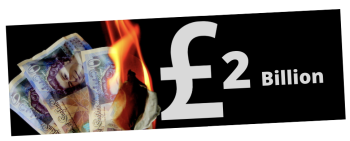
The sex trade is costing us a fortune’ Clara, formerly in prostitution. The cost of enabling the sex trade is immense (which is in stark contrast to the cost of shutting it down):
UK – Prostitution costs the State £2 billion/year (p20)
UK – Prostitution might cost the state £5billion/year (p58)
UK- Cost of serious organised crime (heavily funded by prostitution): £47 bil/year
UK – serial prostitution murders cost the state £6mill+
UK – the social and financial costs of prostitution
France – Prostitution costs the state €1.3 billion/year
Leeds – ‘Prostitution zone’ costs £200,000/year (p24)
Leeds – Campaigners estimate the zone cost over £400,000/year
Cost to Women in the Industry: Negative impact on earnings over lifetime (p20)
50% of women in prostitution are in debt [UK]
The Cost of Ending Prostitution

Viewing prostitution as abuse by getting women out and eradicating demand, is hugely cost effective. And it is infinitely cheaper than enabling prostitution. The above infographic still doesn’t cover the full cost of prostitution (the organised crime, county lines, drugs, corruption of democracy etc).
France €2.35 million seized in 4 years from pimps, reallocated to victims
UK 2:1 Return on Investment
Ipswich: At least a 2:1 return on investment when this approach adopted
Ipswich – Cost just £7,000/year to support each woman to exit
The Wider Impact
 Prostitution isn’t just a ‘private matter between consensual parties’. It affects us all. From ‘no go’ areas in sex industry zones to far greater violence towards all women by sex buyers:
Approaches to Prostitution
These are the different ways of dealing with prostitution:
Work or Abuse?
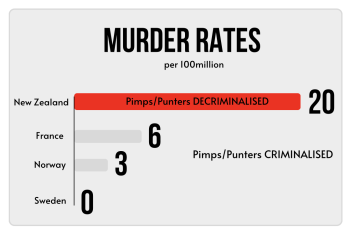
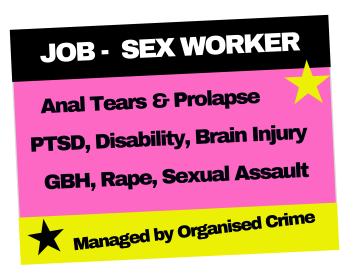
Evidence from across the globe shows that legitimising profiteers and punters – particularly when the industry is also deregulated – makes the sex industry infinitely more harmful. The industry expands, so too does trafficking and child prostitution. Of course it does! You have given a ‘Green Light’ to abusers and to the profiteers who can make a fortune off the women and children in the sex trade. Worst of all, the entire sex trade then operates like an ‘underground’ industry.
By contrast, recognising prostitution as abuse drastically shrinks the industry (fewer buyers, many fewer sellers). With abusers (profiteers and punters) criminalised, the rights and safety of those in prostitution increases. And there is much less trafficking (as it is much less lucrative and harder for traffickers to operate).
Decrim – Country by Country
A ‘prostitution is work’ ideology either means the industry is ‘fully decriminalised’ (sellers, punters and profiteers all decriminalised) with minimal state intervention or ‘legalised’ (everyone decriminalised but more state intervention). But see if you can spot the difference in this report.
Even the sex trade lobby admits the utter failure of legalisation (even though state control should offer more protection). And they now avidly lobby for ‘full decriminalisation’ aka ‘full decriminalisation, full deregulation’.
Either way, the following are the (surely entirely predictable) consequences of legitimising the sex trade:
Country-by-Country
Australia
Some states have ‘legalised’, some ‘decriminalised’ prostitution
Overview: How legitimising the sex trade has failed
Book: ‘Making Sex Work’ in Australia
Simone Watson (survivor) explains the harms
Exiting Support DENIED in Australia
Belgium
Myths and Misinformation about Belgium ‘decriminalisation’
Germany
Prostitution Legalised (pimps/punters decriminalised, state profiteers). The country is now dubbed ‘the brothel of Europe’ with 1.5 million men buying sex every day, 90% of those in prostitution trafficked from abroad and abuse and murder out of control.
Estimated 1.5million men buy sex every day
90% in prostitution trafficked from abroad
Deaths with 1/2 million in state brothels
Yearly murders/Attempted murders
Review of Murders of Women in Prostitution
The truth about Germany’s Mega Brothel
Germany – a key destination for traffickers
Germany – Exploitation and Trafficking
German sex trade – an overview
Political leaders now calling for Nordic Model (2025)
Netherlands
Prostitution legalised
Brothels ‘A failed social experiment’: Mayor of Amsterdam
Lifting Brothel ban drove Huge Increase in Abuse
Holland to criminalise men who buy trafficked women
Netherlands moves to end sex trade entirely
Video: Dutch Legalisation Failure
Full report: Dutch Legalisation Failure
Ipswich pre 2006
Ipswich tried various approaches before attempting a Nordic or Abuse Model in 2026. Prior to that it tried criminalising everyone it also tried legitimising the industry. The result was:
Seriel murder of 5 women in prostitution by a ‘regular John’
Leeds
Prostitution decriminalised (unlawfully?) in a “managed zone” in Holbeck
Holbeck: A case study of hell
Women selling sex criminalised, not punters
Leeds shuts the ‘Managed Zone’ after 6 years of failure [2021]
New Zealand
‘Full Decrim and Full Dereg’ – Profiteers and punters decriminalised and industry deregulated.
Overview: Decriminalisation a total failure
A destination for trafficking & child rape prostitution
Indigenous women and children targeted by traffickers
How Law has increased harm for the prostituted
Analysis of Child sex trafficking in New Zealand
Survivor speaks out against decriminalising pimps
Prime Minister: ‘Law hasn’t worked’ [2012]
Switzerland
Prostitution legalised 80 years ago, this includes ‘drive thru’ brothels:
The Brutal Reality of 80 years of legalisation
UK
In effect, the UK sex industry is decriminalised. Buying and selling sex is legal. Pimping and brothel keeping are not. However, councils actively license massage parlours/saunas and strip clubs whilst brothels operate so openly they’ve had their own TV shows. Pimping, in the form of Escort agencies, Only Fans, Sugaring sites etc openly advertise across the internet. Scotland has recently clamped down on brothels,’saunas’, ‘massage parlours’ and kerb crawlers:
UK – a ‘trafficking hub’ for Romanian women
80% of women in London brothels likely to be foreign nationals
Most women in lap dancing then sell sex (Home Office, 2019 p27)
USA
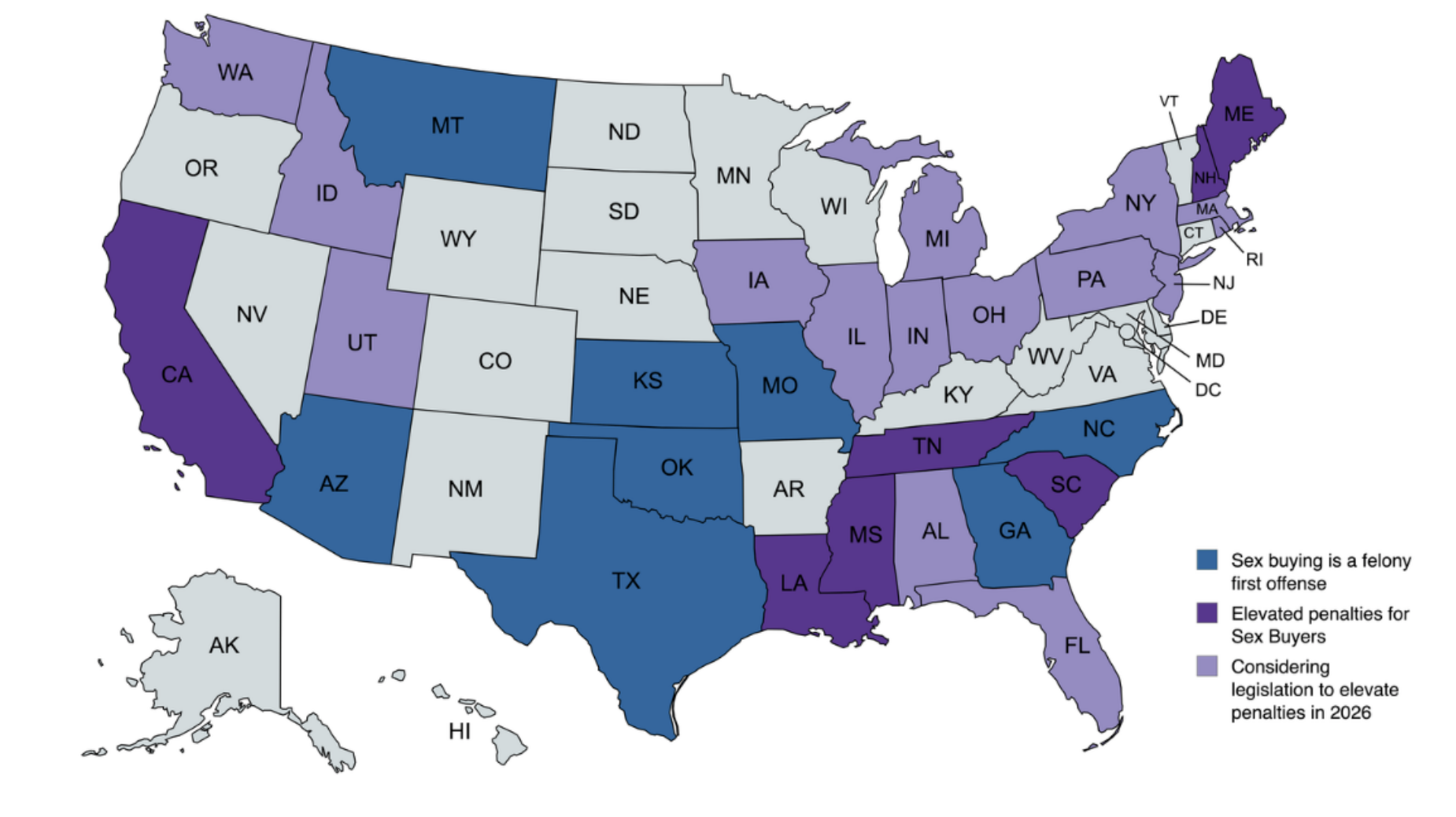
USA has a patchwork of policies:
Nevada
Prostitution Legalised – pimps and punters decriminalised, with some state control:
State now a hub for sex trafficking & sex trade murders
Victim sues state for the abuse it enabled via its pro-prostitution laws
Judge denies above victim anonymity despite risk to life by traffickers/organised crime
Prostitution as Abuse
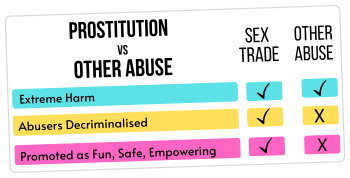
Survivors and their allies understand prostitution as abuse – inherently harmful, with uncontrollable levels of violence. This means all buyers and profiteers (‘pimps’) should be stopped, not legitimised. Those who sell sex should never be criminalised. So they advocate to end sex buying (surprisingly easily achieved), criminalise all profiteers/punters and support all who sell sex (including the 90% who want to escape). This is the ‘Nordic Model’. When properly implemented, this has proven hugely successful:
Success of Nordic Decriminalisation
UN Special Rapporteur calls for Nordic Model
Survivor leader calls for Nordic Model
Home Affairs Committee calls for Nordic Model to be considered
Scottish Government recognises prostitution as abuse not work
Comparison of different systems
International Evidence that Nordic Model Works
Prostitution as ‘work’ vs ‘Abuse’
70 women murdered in Germany; zero in Sweden
European Commission
Report on tackling trafficking
DOJ: Ireland (Nordic Model)
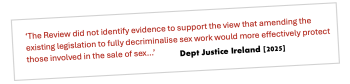
No evidence of ‘underground’ industry or decreased safety
Country-by-Country
Nordic Model a resounding success, when properly implemented:
Ipswich 2006
Introduces Nordic Model for street prostitution after serial murders
Street Prostitution eradicated
Sweden 1999
Nordic Model introduced. O murders due to prostitution since
Large decrease in trafficking, child rape prostitution, violence
Sex trade shrinks by 80% in less than 10 years
Canada 2014
Nordic Model introduced after serial killing of native women
Ineffective as Law not properly implemented
France 2016
Introduces Nordic Model in 2016
Nearly 400 exit programmes out of prostitution
55% increase in criminal investigations into trafficking & pimping in first 3 years
Review shows Law effective when implemented properly
Ireland 2017
Introduces Nordic Model in 2017
Most who sell sex do not identify as ‘sex workers’
Early evidence shows shift to criminalise buyers not sellers (p 12-13)
Govt Review: Success is only hampered by poor implementation
Govt Review Analyses: No ‘underground’ industry or decreased safety
Northern Ireland
Introduces Nordic Model
Sex Trade lobby misrepresents success as failure
Israel 2020
Introduces Nordic Model. Prior to that pimps kept most of their earnings
Scotland 2023
Takes steps towards Nordic Model
Prostitution – Inevitable?
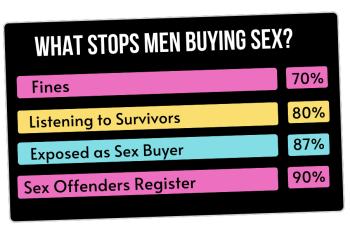
One of the key arguments used against the idea of trying to end sex buying is that this is utterly impossible – prostitution is the ‘oldest profession’ (or rather oppression), totally inevitable and unstoppable. But actually it is extremely easy to stop sex buying – it can essentially be eradicated. Almost over night:
The ‘Johns’

Sex buyers almost invariably demonstrate dehumanising, if not horrific, attitudes towards the women they buy and towards women more generally – often inflicting violence on both. This is worst where the sex industry is legitimised because all this really legitimises are punters, pimps and traffickers & their attitudes and behaviours.
Online Pimping Sites

Most prostitution has moved online, dominated by a few giant corporates (many of whose directors are currently ‘lawyered up’ against charges of sex trafficking, fraud and other serious crime). All sites have meaningless safety measures in place and are the usual sex trade ‘Wild West’ of exploitation, paedophilia, trafficking and organised crime.
The sex work lobby demands that online pimping sites be worked with so the rampant abuse they harbour can be ‘regulated out’, claiming as always that if they are shut down the industry will ‘go underground’. But in the USA, legislation was passed to ban online pimping sites. This collapsed the market – no magical ‘underground industry’ materialised. By contrast, in the UK, policing bodies have been fruitlessly ‘working with’ online pimping sites as ‘key partners’ for years:
‘By Pimps, for Pimps’
How did the idea of ‘sex work’ and ‘decriminalising pimps’ gain such a foothold?
Global ‘sex work’ groups are frequently dominated by pimps (they are sex workers after all). And many of the most prominent global ‘sex work’ advocates are actually pimps.
Their big breakthrough came when a Sex Work group led by a known pimp lobbied UN Aids to adopt a ‘sex work’ policy. This pimp was then jailed for sex trafficking, but is still held up as a ‘human rights defender’ and the policy was never re-examined. Later, UN Women adopt the same policy. In the UK, the owner of the country’s largest pimping network successfully lobbied Amnesty International UK.
So for decades, Governments, Trade Unions, Human Rights groups, even anti-trafficking groups, have been doing exactly what pimps (hiding as ‘sex workers’) want, including funding them:
Sex Work unions advocate for pimps
‘Sex Worker’ Unions: Full of pimps, not those who sell sex
International: ‘Sex Worker’ Union (NSWP): Led by convicted Sex Trafficker
Mexico: NSWP Mexico: Chair convicted of sex trafficking
Australia: ‘Erotic Services Provider Union’: Led by convicted pimp
France: ‘Sex Workers’ group (STRASS): Hardly any members
Germany: Sex Worker Union (BesD): Represents 0.01% of sex sellers
Netherlands: ‘Sex Work’ Group (Red Thread): Led by academics who minimise harm
Spain: ‘Sex Work’ Group (Ambit Dona): No members have sold sex
Int Union Sex Workers (IUSW): Heavy ties to one of UK’s biggest pimps
Ugly Mugs Ireland: Set up by Escort Ireland (linked to 2 convicted pimps)
UK: National Ugly Mugs: Funded by escort site, Vivastreet (£100,000 in 2022)
‘Sex Workers’ in other Unions?
Not only are those selling sex not represented by ‘sex worker unions’, they do not join mainstream unions either. That is because joining a union makes it even harder to do the one thing 90% of those selling sex want to do – get out.
Germany: Trade Union: Membership opened to prostituted, only handful join
Germany: 1 million in prostitution, 1% registered with Trade Unions
Spain: Existing Trade Union: Membership opened to prostituted – none join
Survivor: ‘Join a Union & it is impossible to get out of this ‘job”
‘Sex Worker Unions’ – Advocate for Pimps
International [NSWP]: Claims their sex trafficker leader is ‘human rights defender’
‘Sex Worker’ Unions: Murders ignored in places where pimps decriminalised
‘Sex Worker’ Unions: Uses domestic violence murder to claim ‘stigma kills’
‘Sex Worker’ groups: No support for wiping criminal records for the prostituted
German: ‘Sex Worker’ group (SUBWAY): ‘Goal is not to get people out of prostitution’
India: ‘Sex Worker’ NGO (SANGRAM): Cut off from US funding for enabling pimps
New Zealand: ‘Sex Work’ Group (NZPC): Lie to & misinform those who sell sex
Survivor speaks out against ‘Sex Worker Unions’
Other Unions
‘Sex Work’ groups spend considerable time and resources lobbying the Trade Union movement to support full decriminalisation of the sex trade. This is always framed as ‘decriminalise sex workers’. Typically Union members have no idea that what they are really voting for is decriminalising buyer/profiteers and the total deregulation of the sex trade:
2022: Unison ends long standing support for Nordic Model
UK: Junior Doctors: Policy is now to lobby BMA to support decriminalising pimps
UK: Nurses Union: Advocates for decriminalising pimps
UK: GMB, ASLEF, TUC Union: Tactics used to ‘woo’ Trade Unions
2025 TUC Women’s Congress: Votes AGAINST decriminalising pimps
‘Human Rights’ Advocates
A similar tactic has been use with astonishing success on human rights groups, even anti-trafficking organisations.
The 2021 list of NGOs and individuals taken in by the pimp lobby
UK: Amnesty International: Policy dictated by UK’s largest pimp
UN Aids/UN Women: Adopts policies of known pimp – a since jailed sex trafficker
UN: Calls for decriminalising pimps & punters
WHO: ‘decriminalise pimps & punters to reduce spread of HIV’
UN: Rapporteur makes legally false, defamatory pro-sex work claims
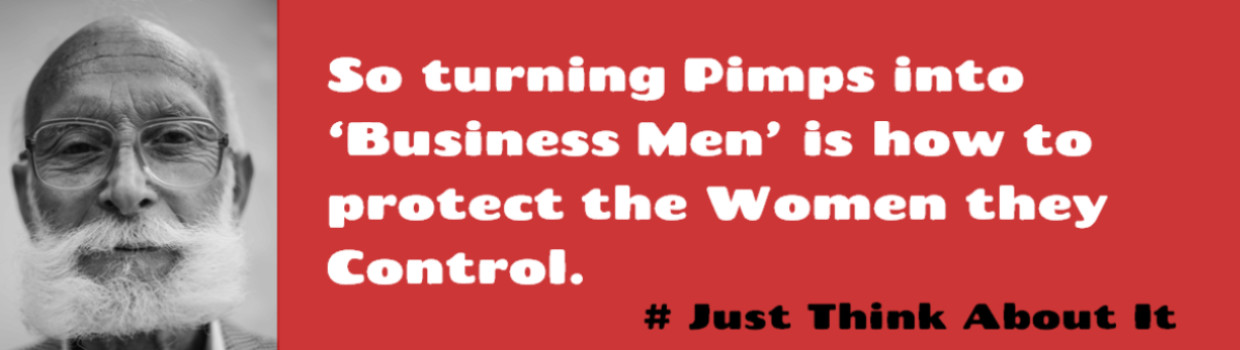
MeToo & TimesUp: ‘Survivor’s Agenda’ dubs pimps ‘business men’
Global Fund for Women: Pro-Prostitution* Chap 7
CARE International: Appears to endorse prostitution* Chap 7
Human Rights Watch: ‘Decriminalise pimps’* Chap 7
Open Society Initiative: Staunchly for Pimp decrim* Chap 7
*from Julie Bindel’s ‘The Pimping of Prostitution’ Chap 7
Political Institutions
EU
European Commission – States can add prostitution ‘revenue’ to GDP
UN
UN Aids/UN Women: Adopts policies of sex trafficker
UN: Calls for decriminalising pimps & punters
WHO: ‘Decriminalise pimps & punters to reduce HIV’
UN Rapporteur makes legally false, defamatory claims
Governments
Netherlands: Founded & funds pro-pimp NGO, ‘Red Thread’
New Zealand: Funds ‘sex work’ group that lobbies for sex trafficking
UK
Governments and others: In Denial
Chair of Government enquiry into prostitution is sex buyer [UK]
NCA (Nat Crime Agency): Online pimping sites = ‘Key Partners’
NPCC (Nat Police Chiefs’ Council): as for the NCA
Politics – from Left to Liberal
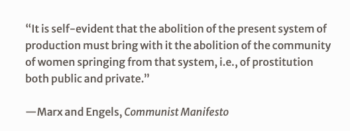
The founding philosophies of the Left (Marx) and Liberals (John Stuart Mill) are fundamentally opposed to prostitution, yet today’s Left (socialists, anti-capitalists, anarchists, Marxists) and Liberals avidly support ‘the oldest oppression’ (which has suddenly become empowering, freely chosen and highly regulated ‘work’):
Trafficking rises exponential after collapse in Socialism
Survivors’ open letter to the Left’s love of ‘sex work’
Anti-capitalist – but not when it comes to pimps
Prostitution – where anarchists went wrong
Prostitution replacing Welfare?
Pimp lobby – same tactics as Slave Trade
John Stuart Mill – opposed prostitution as a system of oppression
Greens
UK: Green Party Policy: Decriminalise Pimps
UK: Caroline Lucas former Leader ‘Decriminalise pimps’
Scottish Greens: Block moves to criminalise pimps & punters
German Greens: Prostitution should be available ‘on prescription’
USA Greens: Criminalise Pimps/punters & support women out!
Lib Dems
UK Policy: Pro-pimp/porn/sex trafficking, anti-age verification [UK]
Scottish Lib Dems (2019): Vote 2:1 to continue pimp decrim policy [UK]
Bank Rollers
George Soros: ‘Bankrolling’ the pimp lobby *
Bill & Melinda Gates: $1 million to Indian ‘Sex Worker Union’ *
New Zealand State: Funds pro-pimp ‘Prostitute Collective’
56 NGOS fund £8million to pro-prostitution projects. Top funders*:
- Ford Foundation: Grants given average £100,000
- American Jewish World Service: £1/2 million per year
- Mama Cash
- Open Society Initiative
“Child Sex Workers”

The sex trade lobby not only defines children raped by men for money as ‘sex workers’, but so do many of those it has lobbied.
Fact or Fake?
Research supporting the ‘sex work’ lobby is shockingly biased (invariably carried out by prostitution advocates – even pimps) and equally shockingly poor quality. But it is often commissioned out to these vested interest groups by Governments, human rights groups and other respected bodies. ‘Peer reviewed’ papers (reviewed by the same cohort of pro-sex trade academics) are then published in leading journals and used to sway the public, decision makers and even anti-trafficking groups. The same academics carrying out this research typically also avidly lobby for pimp decriminalisation (frequently funded with public money and carried out in collaboration with the well respected bodies who have already succumbed to the notion that ‘decrim & dereg is best’).
Breaking the Law
There are numerous examples of how pro-sex trade decisions are anti-human rights and unlawful. All bodies that listen to ‘sex work’ advocates risk not only introducing immeasurably harmful policies but breaking the law. We have gathered just some examples of unlawful decision-making here:
Myths
When you hear something over and over again it becomes very hard not to believe it – that’s how our brains work. And the sex trade lobby is relying on that. That’s why you hear the same sound bites over and over. But think about it, does any of this really stack up?
‘You’re A *****!’

Pornogander

Mainstream and social media are, increasingly, little more than a pornagander tool for the sex trade lobby. This directly ‘grooms’ women and girls into the industry – survivors invariably testify that incessant normalising and glamorising influences their ‘choice’ to try ‘sex work’. How could it not? This is combined with a very large, highly mobilised, grass roots element and mass suppression and abuse against all alternative voices:
The Sex Trade & Covid

Clearly selling sex puts you at high risk of Covid (and multiple other risks). Where the sex trade has been legitimised, it was those still desperately selling sex who were criminalised, not buyers or profiteers. Meanwhile, it was ‘Sex Worker Unions’ leading the call for the industry to re-open, even during the midst of the pandemic, instead of demanding women are helped out of a totally unviable industry:
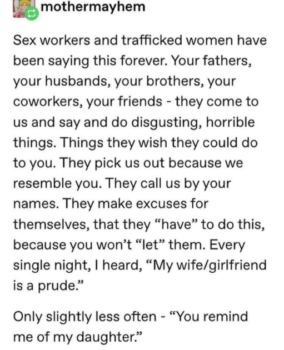
What Sex as Work means
Forms of Prostitution

From porn to escorting .. there might be many different forms of the sex trade, but there is extensive cross over with women often involved in multiple forms. And of course, the entire industry plays by the same rule book, whilst the harm to the women in these industries, and to the rest of society, is the same:
Indoor Prostitution
No safer than street prostitution
The ‘Safety in Numbers’ Brothel Myth
Webcamming
Myths & Harms of online Sex ‘Work’
Online Fans – an experiment in online grooming
Only Fans – the Empowering & Safe myth
‘High Class’ Escorts
It’s often stated that ‘high class’ escorts can make a fortune with little risk. Really? (don’t forget, the men who buy them will be particularly entitled ‘Harvey Weinsteins’)
‘Sugaring’
Home Office Report: Sex is almost always part of the exchange P10
‘Rooms for Sex’

UK – men take full advantage of the pandemic
More
Pornography
